
From military necessity to cinematic mythology and Daniel Lee’s modern Britain, the Burberry trench has spent more than a century changing with the people who wear it.
By Gulfiya Yebergenova
Founder & Editor-in-Chief, ARRVL
Some clothes belong to a season. Others enter the cultural imagination.
Few have crossed that divide as decisively as the Burberry trench.
Its architecture is instantly familiar: the storm flap, epaulettes, belted waist, double-breasted front. So familiar, in fact, that it is easy to forget how little of it began as decoration. Before Hollywood gave the trench mystery, before fashion gave it glamour, it was designed for something altogether more practical: the weather.
What followed was an extraordinary transformation. A piece of functional outerwear travelled from exploration and military life into civilian wardrobes, crossed onto the cinema screen and eventually became inseparable from the identity of one of Britain’s most recognisable fashion houses.
The trench never entirely left its history behind. It simply kept acquiring new characters.
The Origins of an Icon
Thomas Burberry founded his company in Basingstoke in 1856, aged 21. From the beginning, the story was intertwined with the British climate and the problem of dressing for life outdoors.
In 1879 came the innovation that would help define the house: gabardine, a lightweight, breathable and weather-resistant fabric. It soon travelled considerably further than the English countryside. Roald Amundsen used Burberry gabardine during the expedition that became the first to reach the South Pole; Ernest Shackleton wore it during Antarctic exploration.
Adventure gave Burberry’s fabric credibility. War would give the trench much of the visual vocabulary we recognise today.
The Tielocken, patented by Burberry in 1912, anticipated the trench coat that followed. During the First World War, Burberry supplied apparel and equipment to the Armed Forces, and details now read as signatures — epaulettes, storm protection, straps and buckles — had functional lives before they became fashion codes.
Then the war ended, and the coat came home.
Its purpose remained. Its meaning did not.
Once the trench entered civilian life, its military precision began to loosen. It could be worn open rather than belted, oversized rather than regimented; its authority could be borrowed, subverted or ignored entirely.
Cinema understood those possibilities almost instinctively.
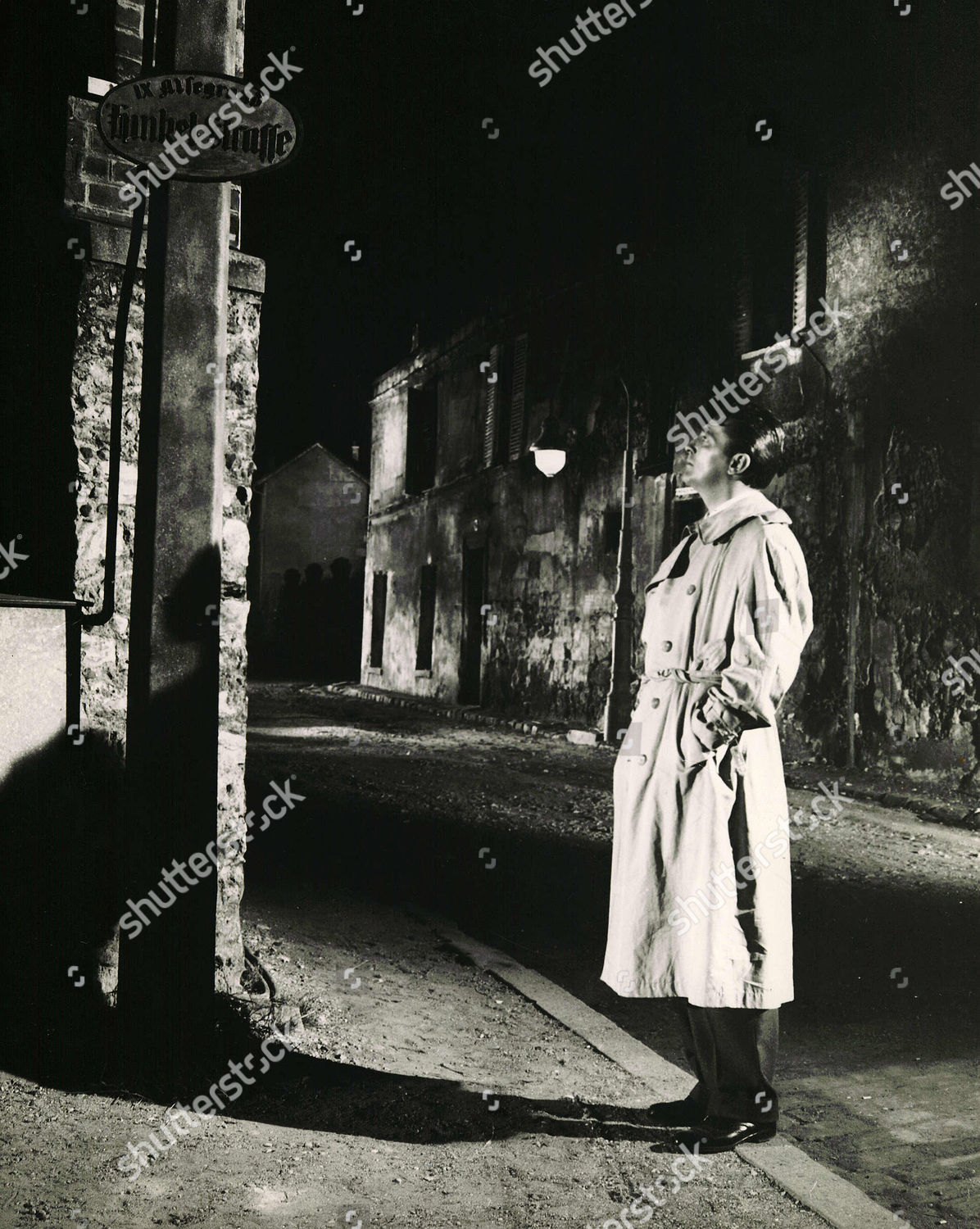
A raised collar could obscure a face. A belt could sharpen a silhouette. In rain, fog and black-and-white photography, the trench seemed to possess its own atmosphere.

Humphrey Bogart’s Rick Blaine in Casablanca became one of cinema’s enduring trench-coated figures: controlled, romantic, emotionally elusive. Robert Mitchum in Out of the Past took the silhouette somewhere darker, into the shadowed visual language of film noir.

But the trench was never destined to remain exclusively masculine.
Greta Garbo, Gloria Swanson and Bette Davis were among the women who helped disturb that association. Katharine Hepburn made an oversized trench seem perfectly aligned with the independence and disregard for conventional femininity that defined so much of her public image. Masculine proportions did not erase femininity; they gave it another vocabulary.
And then there was Audrey.
In the rain-soaked final sequence of Breakfast at Tiffany’s, Audrey Hepburn’s Holly Golightly appears in a trench coat. On her, a garment carrying associations of officers and detectives suddenly becomes vulnerable, romantic and unmistakably modern.
The coat itself had barely changed.
The character inside it changed everything.
That may be the most compelling explanation for the trench’s longevity. It has never insisted upon one identity. Instead, it seems to absorb the identity of whoever wears it.
French style gave it another accent. Brigitte Bardot, Catherine Deneuve, Charlotte Rampling and Charlotte Gainsbourg helped move the trench into a vocabulary of European ease — that elusive territory where clothes appear considered without appearing overly constructed.
By then, something invented to withstand rain had acquired a remarkable emotional range: authority and anonymity, masculinity and sensuality, polish and rebellion.
The trench was no longer simply dressing the character.
It had become part of the character.
Reinventing Britishness
Burberry, meanwhile, had developed a language extending far beyond a single coat.
The house check, introduced as a rainwear lining in the 1920s, became another instantly recognisable code. Gabardine, check, trench and the persistent suggestion of British weather formed a vocabulary powerful enough to survive changing decades.
But heritage presents fashion with a peculiar problem. Recognition is invaluable; predictability is not.
Christopher Bailey understood the distinction.
Arriving as Design Director in 2001, Bailey became central to Burberry’s twenty-first-century transformation. Rather than treating Britishness as something preserved behind glass, he opened it to music, youth culture, technology and a softer kind of romanticism.
The trench remained, but its surroundings changed.
Under Bailey, Burberry could evoke an English landscape one moment and the energy of contemporary London the next. The house became an early force in luxury’s digital evolution while its oldest signatures continued to anchor the image.
The archive was not abandoned. It was made desirable again.
Under Daniel Lee, Burberry’s British identity has entered another chapter.

Since taking the creative helm in 2022, Lee has looked to the house’s heritage not as something fixed, but as a vocabulary to be reworked. His vision of Britain is familiar yet unsettled — rooted in tradition, but sharpened by the eccentricity, irreverence and cultural contrasts that have long defined British style.

There is rain and countryside, London and aristocratic eccentricity, music, humour and a streak of rebellion beneath the formality. Familiar checks are distorted and recoloured. Proportions shift. The Equestrian Knight has returned with renewed prominence. Outerwear remains everywhere.

And, inevitably, so does the trench.
For Winter 2026, presented at Old Billingsgate in London, Burberry constructed its world around a reconstructed Tower Bridge, surrounded by scaffolding, streetlamps and rain-slicked surfaces. Trenches appeared in pleated silk, faille, leather and check, their proportions and materials altered without erasing the silhouette beneath.
It was recognisably Burberry without behaving as though recognition alone were enough.
That is the tension every great heritage house eventually confronts: how much can an icon change before it stops being itself?
For Burberry, the answer appears to be: considerably.
The Character Changes
The question feels particularly relevant in 2026, as Burberry marks 170 years.
For The Trench: Portraits of an Icon, photographed by Tim Walker, the house assembled 23 figures from film, music, fashion and sport, including Kate Moss, Jonathan Bailey, Kristin Scott Thomas, Little Simz, Teyana Taylor and Matthew Macfadyen.

Different generations. Different professions. Different relationships with British culture.
The same coat.
There is something almost cinematic about the idea. Bogart could never wear the trench like Hepburn. Hepburn could never wear it like Mitchum. Kate Moss brings something different again, as does Little Simz.
And perhaps that is precisely why the trench has survived.
Fashion creates desirable objects constantly. Far fewer remain culturally legible once the moment that created them has disappeared.
The trench has endured because its identity has never been completely fixed.
It began with necessity — weather, movement, exploration, military life. Cinema discovered its dramatic possibilities. Women complicated its masculine associations. Fashion altered its proportions, shortened it, enlarged it, coloured it and repeatedly dismantled it only to put it together again.
Yet look closely and its history remains remarkably visible.
The storm flap still remembers rain.
The epaulettes still carry an echo of uniform.
The belt still changes the posture of the body beneath it.
None of this requires the wearer to belong to the past.
That is the difference between a relic and an icon.
A relic asks to be preserved.
An icon can survive being changed.
Burberry began by designing for British weather. More than a century later, its most famous coat has travelled through expeditions and war, Hollywood and European cinema, fashion photography, runways and streets.
Its history makes it significant. Its ability to escape that history keeps it relevant.
Every generation has been allowed to put somebody new inside it.
